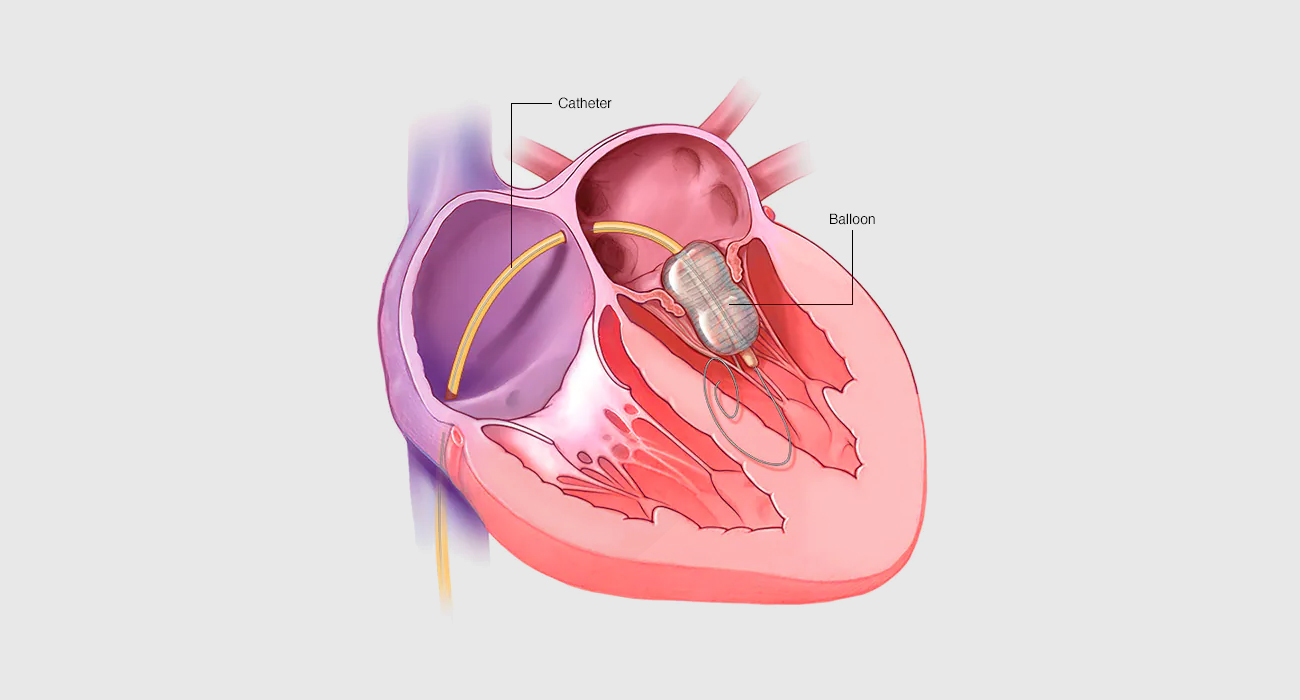
A Balloon Valvotomy Is A Minimally Invasive Procedure. A Doctor Uses A Thin Flexible Tube
(Catheter) That Is Inserted Through An Artery In The Groin Or Arm And Threaded Into The
Heart.
At the point when The Tube Reaches The Narrowed Mitral Valve, A Balloon Device Located On The
Tip Of The Catheter Is Quickly Inflated. The Narrowed Or Fused Mitral Valve Leaflets Are
Separated And Stretched Open As The Balloon Presses Against Them. This Process Increases The
Size Of The Mitral Valve Opening And Allows More Blood To Flow From The Left Atrium Into The
Left Ventricle.
What should I expect before the procedure?
Most patients will need to have blood tests, a chest x-ray, an electrocardiogram and an echocardiogram. These tests are usually scheduled the day before the procedure. Ask your provider what medications should be taken on the day of your test.
If you have diabetes, ask your physician how to adjust your medications the day of your test.
Tell your healthcare provider if you’re taking any blood-thinning medications such as Coumadin® (warfarin). An alternate method for thinning your blood may be prescribed a few days before the procedure.
You won’t be able to eat or drink after midnight the evening before the procedure. Leave all valuables at home. If you normally wear dentures, glasses or a hearing assistance device, plan to wear them during the procedure to help with communication. Tell your healthcare provider or your care team if you have any allergies.
How is a balloon valvotomy performed?
Balloon valvotomy is a nonsurgical procedure performed in the cardiac catheterization laboratory by a cardiologist and a specialized team of nurses and technicians.
Long, slender tubes called catheters are first placed into blood vessels in the groin and guided into the heart’s chambers.
The cardiologist then creates a tiny hole in the wall between the upper two chambers of the heart. This hole provides an opening for the cardiologist to access the left atrium with a special catheter that has a balloon at the tip.
The catheter is positioned so the balloon tip is directly inside the narrowed valve. The balloon is inflated and deflated several times to widen the valve opening.
Once the cardiologist has determined that the opening of the valve has been widened enough, the balloon is deflated and removed.
During the procedure, the cardiologist may perform an echocardiogram (ultrasound of the heart) to get a better picture of the mitral valve.
How long does the procedure last?
The procedure lasts about one hour, but the preparation and recovery time add several hours. Plan on staying at the hospital all day for the procedure and remaining there overnight. Patients usually go home the day after. Arrange for someone to take you home when you’re ready to leave.