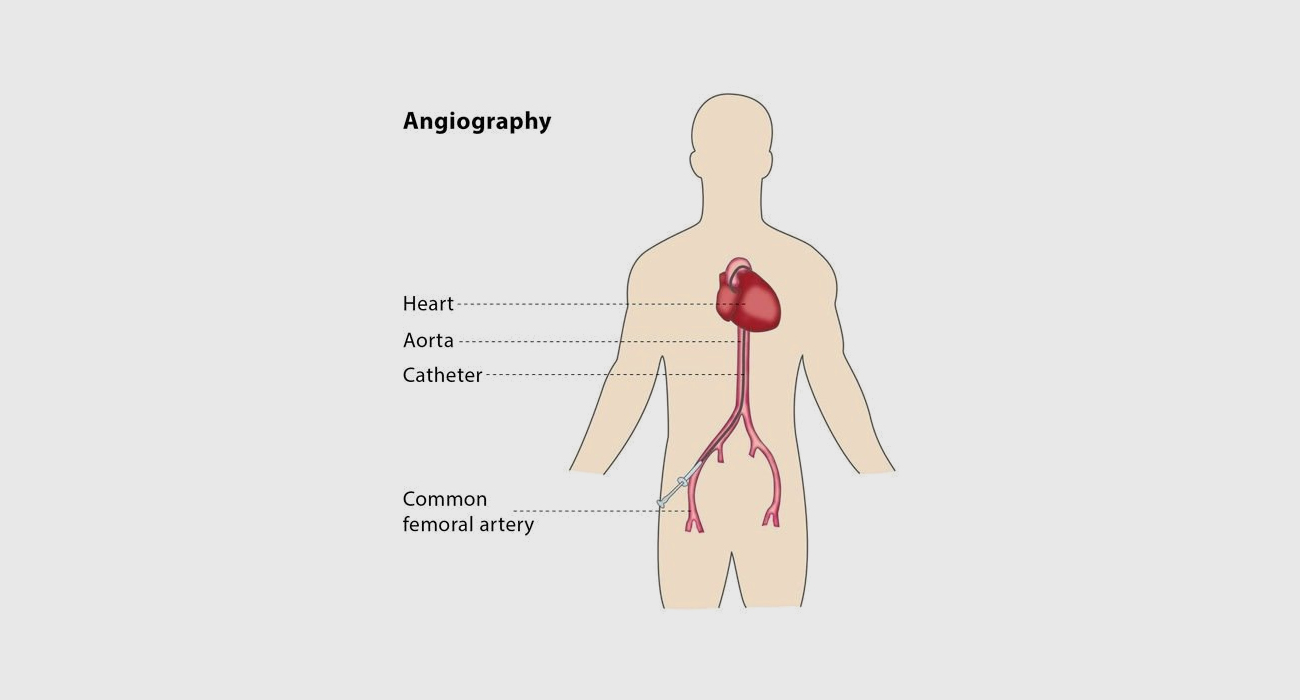
Angiography Is A Minimally Invasive Medical Test That Helps Physicians Diagnose And Treat Medical Conditions. Angiography Uses One Of Three Imaging Technologies And, In Most Cases, A Contrast Material Injection Is Needed To Produce Pictures Of Blood Vessels In The Body.
- X-Rays With Catheters
- Easy And Affordable Billing
- Outdoor Checkup
- Computed Tomography (CT)
- Feel Like Home Services
- Magnetic Resonance Imaging (MRI)
Why angiography is used
Angiography is used to check the health of your blood vessels and how blood flows through them.
It can help to diagnose or investigate several problems affecting blood vessels, including:
atherosclerosis – narrowing of the arteries, which could mean you're at risk of having a stroke or heart attack
peripheral arterial disease – reduced blood supply to the leg muscles
a brain aneurysm – a bulge in a blood vessel in your brain
angina – chest pain caused by reduced blood flow to the heart muscles
blood clots or a pulmonary embolism – a blockage in the artery supplying your lungs
a blockage in the blood supply to your kidneys
Angiography may also be used to help plan treatment for some of these conditions.
What happens during angiography
Angiography is done in a hospital X-ray or radiology department.
For the test:
you'll usually be awake, but may be given a medicine called a sedative to help you relax
you lie on an X-ray table and a small cut (incision) is made over 1 of your arteries, usually near your groin or wrist – local anaesthetic is used to numb the area where the cut is made
a very thin flexible tube (catheter) is inserted into the artery
the catheter is carefully guided to the area that's being examined (such as the heart)
a contrast agent (dye) is injected into the catheter
a series of X-rays are taken as contrast agent flows through your blood vessels
The test can take between 30 minutes and 2 hours. You'll usually be able to go home a few hours afterwards.
Risks of angiography
Angiography is generally a safe and painless procedure.
But for a few days or weeks afterwards it's common to have:
bruising
soreness
a very small lump or collection of blood near where the cut was made
There's also a very small risk of more serious complications, such as an allergic reaction to the contrast agent, a stroke or a heart attack.
Types of angiography
There are several different types of angiography, depending on which part of the body is being looked at.
Common types include:
coronary angiography – to check the heart and nearby blood vessels
cerebral angiography – to check the blood vessels in and around the brain
pulmonary angiography – to check the blood vessels supplying the lungs
renal angiography – to check the blood vessels supplying the kidneys
Occasionally, angiography may be done using scans instead of X-rays. These are called CT angiography or MRI angiography.
There's also a type of angiography that's used to check the eyes, called fluorescein angiography. It's different to the other types of angiography and is not covered in this topic.